Tuesday, March 4, 2014

Will It Ever Warm Up?

This winter is officially ranked as the 7th coldest winter in the past 100 years for Cleveland.  Of course this had to come the year we decided to begin hosting the Cleveland Open, open the new clubhouse, and my first official year as Head Superintendent of LCC.  I certainly don't like breaking bad news to anyone, but I do feel I need to communicate to the membership of LCC what should be expected as the season gets closer.  In my previous post, I put up some photos of plugs taken from 3 different fairways on the course.  The worst being from 11 fairway mound.  That plug recovered well after being in our warm shop for 2 weeks.  I did the same thing with some plugs from greens I was concerned with, and results were not as good.  The difference being our fairways are nearly pure bentgrass, and our greens nearly all Poa annua.  I will post photos below of turf from our 14th green and the 16th green.  As the first "polar vortex" hit, a handful of our greens had some amount of exposed turf.  Exposed Poa to -12 not including windchill is a bad combination, and the turf has encountered these conditions multiple times this winter.
16 Green
 Being exposed to the north, 16 green had the most exposure to the elements this winter.  This plug has been in our shop for 2 weeks.  You can see how the Bentgrass recovered (the small patch of green turf), while the Poa did not.  There are however lots of Poa seeds germinating throughout this plug.
14 Green
This plug from 14 green was under snow cover all winter.  Snow forms a great natural insulation for the turf.   The link below is a good article posted by the USGA.
http://www.usga.org/course_care/regional_updates/regional_reports/northcentral/Don%E2%80%99t-Over-React-%E2%80%93-Time-To-Consider-All-Options---February-2014/

Just to give you a visual idea of this winters extreme temperatures, I posted some graphs below that show December, January, and February's temps.
December

January

February
 Our weather station data shows that the average temperature for both January and February was 13 degrees.  With temperatures reaching -12 in both months.  It has to be coming to an end here soon


Wednesday, February 19, 2014

2014 Winter Check-up

As all of you who stick around Cleveland through the winter know, it has been a tough one.  With the sub zero temperatures, melting, and freezing there becomes some concern for the condition of the turf.  The concerns are crown hydration for both Poa annua and bentgrass, and no gas exchange due to ice cover.  The health of the turf going into winter plays a big role in how long the turf can tolerate ice covered conditions.  We have only really had one thawing and freezing episode, so my concern for crown hydration is less than that of some ice coverage we have been monitoring.  Below are pictures of some plugs taken from around the course.  One from 11 fairway mounds, one from a low spot on 15 fairway, and one from the bottom of the hill on 17 fairway.  The mounds on 11 fairway have been exposed to two sub-zero stretches of weather.  The mounds become exposed by the wind and therefore don't have the protection of snow cover.  This damages the turf just like over exposure to freezing winds would damage a persons skin.  The good news is, the turf will usually recover from this quickly after a couple mowing's, and increased soil temperatures.  You will notice the wind damage I am talking about on the photo of the plug from 11 fairway.  The good news is, the plug from 15 that was under ice looks great.  We will monitor these over the next couple of days to make sure we see growth.

11 Fairway Mound

Ice Covered portion of 15 Fairway

Bottom of Hill on 17 fairway

Monday, January 13, 2014

Removing Some Trees

As you all know, there are a lot of trees on the course that are dead, dying, or dangerous.  We had some of these trees removed recently, and were able to do it at minimal cost.  An Amish logging firm came out and did the work.  Any usable lumber was applied as a credit to our invoice.  They removed the trees that were too large for our crew and equipment to handle.  These trees were hallow, had less than 50% of the canopy alive, or were growing from a V close to the ground.  Trees with these flaws create danger for golfers and the course.  Below are some pictures of trees that were removed.

This Pin Oak was growing in a V formation, and had little support at the base.

This Oak had very little support at the base as you can see.

Friday, December 6, 2013

New Tees In Preparation for the Web.com Tour

With the PGA bringing its Web.com tour to Lakewood CC, a few minor modifications are being made to the course.  These changes will not affect members playability, but will make the course more challenging for the tour players in the event.  A new Tee is being built on #2 that will add another 50 yards to the hole, and #3 black tee has been moved to the right just a little and expanded considerably.  #3 will also be able to be played at 200 yards now.  Below are photos of the projects currently in progress.
#2

#3

Friday, October 18, 2013

Putting Green Update

I will try to post an update once a week on the progress of the new putting green.  We began seeing germination of the seed on day 7, and have had good growth and more germination everyday since.  Today is day 11 since seed went down.  Below are photos of day 9 and day 11.
Day 9

Day 11

Friday, October 11, 2013

LCC's New Putting Green

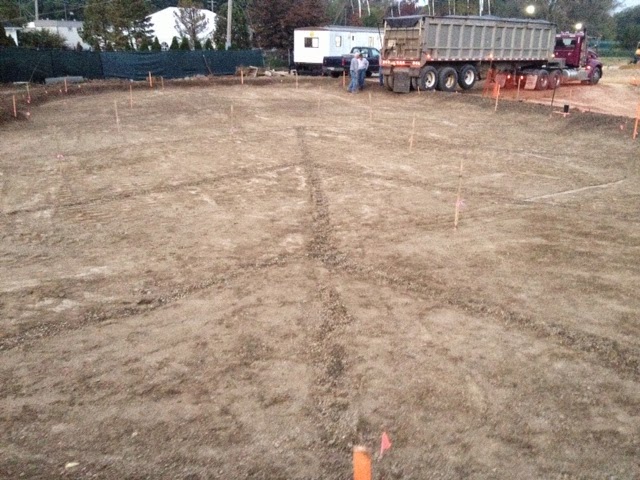
As most of you are aware, construction of the new putting green is complete.  We are very pleased with the finished product.  It was a lot of work, but with a great LCC crew, and a great local contractor Mike O'Donnell (Precision Construction), the whole project was a great success.  Being local allowed Mike O'Donnell to come on site and bid the project accordingly.  With Mike knowing the abilities of our crew, he was comfortable with us doing the Irrigation, final grade around the perimeter, and laying all the sod.  Bellow are some pictures from bare ground to finished product.  This partnership not only produced a great product, but also saved an enormous amount of money.


Wednesday, September 4, 2013

Greens Aerification

Aerification went great this week.  We had a great turn out from our staff Monday evening, and the weather could not of been better.  We were able to get 10 greens finished in about 3.5 hours.  Tuesdays weather was even better in that there was no dew in the morning.  Dragging the sand into aerification holes requires it to be dry.  When there is no dew, it allows us to begin top dressing while it is still cool out. Dragging the sand in bruises the turf, and it is harder on the plant when this is done in warmer temperatures.  So the turf was put under a little less stress this year.  Our forecast looks decent, so recovery should come in the next 14 day give or take a few.  Smoothness will begin returning next week, but speed will be a bit longer of a process.  We thank everyone for their cooperation.  We hate doing this as much as you hate us doing it, but it is just too important of a practice to put off.

Tuesday, June 18, 2013

New White Tee on 10


Here is the new white tee on #10.  We were able to use soil from the old putting green for the final grade, extra clay from the contruction site for the base, and all the sod was from on site.  If weather continues to be good, we plan on putting new white tees on 6, 8, and 18 as well.  All these tees are on the master plan, but never done to keep the cost of  the renovation under budget.  
Posted by Picasa

Friday, May 24, 2013

Thick Spring Rough


This time of year we typically hear comments about the rough being too difficult to play out of.  With rapid growth of cool season turf in the spring, and projects being worked on, it is very difficult to keep the rough at a height golfers like.  We mow the rough twice a week, and mow selected spots through the course three time per week.  Once soil temperatures rise and we have consistently warm temps, the rough will become more manageable.  There is a graph below showing the growth habits of cool season turf.  You can see in the graph how much more growth the turf has in the spring.  The link below is a good article from the USGA explaining this topic.

http://www.usga.org/course_care/regional_updates/regional_reports/midatlantic/Spring-Rough-Is-Rough!---June-2010/


Tuesday, May 14, 2013

Several Updates

The past month has really been busy for the grounds crew.  We filled our irrigation system last week, and had 6 sections of old pipe blow out.  There is this blue pipe we run across occasionally, and it was not happy coming up to pressure this year.  Three of the six breaks we encountered were this blue pipe.  We were able to get everything repaired, and the system seems to be holding pressure well.  The FCC's mandate of going from wide band to narrow band also went into effect beginning this year, so instead of going to a narrow band remote system we purchased 2 MI licenses from Rainbird.  These licences allow us to control our irrigation from our smart phones or Ipad, and saved us thousands of dollars.
The memorial bridge on 18 has also been completed, and looks really nice.  With the dryer weather we have been able to get weeds sprayed, and all the stump holes filled and seeded.  We have four new white tees planned, and hope to get these started soon.  As many of you have noticed, there are some odd looking circles on some of the greens.  This is called Waitea Patch.  It pops up every spring, and usually fades away on its own, but this year it dug its teeth in a little deeper.  It has heeled up on all the greens but 5.  It is no longer active, and we are seeing good recovery.  I think we may actually be out of the cold weather, finally!


Friday, May 3, 2013

Spring Aerification is Done!

We wrapped up our core pulling (aerification) yesterday.  We brought in a little extra help so we could complete the fairways over a two day period.  Other than a couple equipment breakdowns on the first day, everything went really smooth.  Its been 18 days since greens were done, and they are completely recovered.  We give the greens a week to recover and let the sand settle into the canopy of the plant before mowing, then we will mow with some older mowers for 7-10 days so we don't dull our good mowers too bad.  We just began getting into our mowing and rolling routine, so the greens should be getting back into their true form shortly.  Below are several videos of our fairway aerification process.


Friday, April 5, 2013

New Walking Bridge on 18

Work has begun on the new walking bridge in honor of Jim Walsh.  Footers were poured yesterday, and the culvert was put in place today.

Tuesday, April 2, 2013

The Course Is Actually Opening

A majority of our grounds staff returned today.  With things drying out, and temperatures climbing we are hoping Thursday will be the day.  Our staff was able to get a lot of debris cleaned up, tees mowed, and approaches mowed.  We will begin mowing fairways tomorrow.  The amount of clippings we got on approaches was amazing, so fairways could end up taking a little more than 1 day.  We will cut the greens for the second time Thursday, and we should be good to go.  Bunkers take a lot of maintenance in the spring, so we hope to have back in good condition by next week some time.  Stay tuned for the official word for Thursday.  Our first official grounds tweet will be to inform you that we are opening the greens.
1 Tee

                                                                          1 Approach

Friday, March 22, 2013

Mother Nature Is Not Cooperating

As we are wrapping up some final equipment details, Mother Nature apparently has different ideas about getting the golf season started.

Monday, February 25, 2013

Winter Update

     The reel grinding has finally been completed, and the machines are almost all put back together.  Our mechanic Mel is very happy with the job Mike has done grinding all the reels.  We are continuing repairs and maintenance to the equipment fleet (brakes, batteries, hydraulic leaks, oil leaks, engine repairs/replacements, and anything else that needs attention) in order to give ourselves a smooth start to the season.
     We have also been able to take down 11 trees that were approved for removal.  There is still some debris to be picked up from the tree removal that will be taken care of once the ground freezes back up.  If the forecast holds up, we should be able to be out next week picking up the logs and branches still remaining.
     We have also set up a Twitter account for the grounds department this year.  We will be sending out tweets informing those following us of what's happening on the course in real time.  whether it is course conditions, or witnessing a member hit a hole in one, I think this will be a fun way to keep all of you informed of the little things happening at the club.  Just go to twitter.com and sign up.  Once you're signed up just search for LakewoodCC Greens@LCC_Supt and choose to follow us.  Download the Twitter App on your smart phone, and you will have constant access to our twitter feeds.  If you have any questions about this, please feel free to send me an email (dan@lakewoodcountryclub.com) or just stop me and ask.

Friday, January 11, 2013

Winter Reel Grinding Extravaganza

The question I wish I had a dollar for every time someone asked me, "What do you do during the winter".  Without question, the most time consuming project is reel grinding.  There is a total of 71 reels in our shop, and 58 of the 71 need to be ground this winter.  The grinding process begins with the mower being broken down into three pieces; engine, reel assembly, and the handle bar assembly.  If it's a reel off a riding mower, the reel assembly is simply removed from the mower and taken to the breakdown station.  Next the reel assembly is completely broken down.  All the bearings are replaced, and packed with fresh grease, and the unit is reassembled.  The reel is then ground so all blades are even, and sharp enough to cut newspaper.  The bedknife and front roller are then put back on, and the height of cut adjusted.  Finally the mower is put back together and ready to cut as soon as mother nature decides it's time.  This is also the time that other parts of the mower that need repair or replacement are done.  This is a process that will typically take 5-6 weeks.  We will probably take closer to 7-8 weeks this winter with only one mechanic and one less employee.  We can all be assured that the reels will be producing great conditions as Mike Martic the Assistant Superintendent has taken over the grinding duties.
If conditions allow, we will be getting out on the course to remove some trees that are inhibiting play, or no longer are safe, healthy, or aesthetically appealing.  We will also be trying to get a little more drainage done if possible.  I will post weekly updates this winter with our progress in the shop, and any outdoor projects that are able to get done.


Thursday, December 13, 2012

Update

After nearly 3 months without internet at the maintenance facility, we are back online.  Sorry for any inconvenience you endured without information from our blog.  We have been busy since the last post on September 6th.  Super storm Sandy came through and uprooted 15 trees.  We lost four maples and eleven pines.  We were able to get the course cleaned up and back open for play pretty quick compared to some other local courses.
We also rebuilt the regular black tee on 13, tripling the square footage, and raising it by 6 inches.  This will allow the blue tees to be played from this tee on a more regular basis.  If you notice a difference in the sod on the tee, we used sod from the putting green to expand this tee.  The turf from the putting green is a mix of bentgrass and poa annua, while the existing tee surface is a pure stand of bentgrass.  We will be able to slowly eliminate the poa in this tee using growth regulator, and eventually the turf will all be pure bentgrass.
Once we finished the tee, we put our focus on leaf clean up.  Super storm Sandy was actually a big help in this task, as it knocked many of the leaves out of trees for us.  After the storm passed we experienced a long period of dry weather that allowed us to do a complete clean up of all the leaves.  It is rare to have the course as dry as it was this time of the year, and be able to run equipment over the entire course without worrying about causing damage to the course.
As the leaf work wrapped up we began putting together a drainage plan for several of the fairways.  some fairways needed just a few drains installed, while others needed more extensive work.  We added drainage to the left side of 13 fairway near the bunker.  This was an area that would lay very wet after rains, and force us to skip it when we mowed fairways.  We should be able to get equipment on this fairway much quicker after rain now.  We also added several runs of drainage to 7, 11, 2, and 9 fairways, picking up some problem areas.  All these spots are now dry after it rains instead of puddles.  Several hundred more feet of drainage was installed on 6 fairway next.  We still have two areas on 6 we hope to get addressed before the start of next season.  With the drainage added to 6 in spring of 2012 and what we did this fall, this fairway has gone from a real problem when it rains, to seeing minimal standing water after heavy rains. The finale and largest drainage project came on 8 fairway.  This fairway has problems from the beginning all the way to the approach.  We installed over 400' of drainage to this fairway, and still have several areas to finish.  The difference already though is night and day.  8 would be covered in puddles after rain, and we have now narrowed it down to two areas.  While there are still many areas that need drainage, we are very excited about the progress that has been made this fall.

Thursday, September 6, 2012

Why We Aerify

Why do we aerify?
  1. Relieve soil compaction from players and equipment.
  2. To ensure optimum levels of oxygen are available to the roots.
  3. Opens air pockets improving the absorption of fertilizer and water to the root zone.
In a soil or sand profile, there is either air or water consuming any available space. Air/oxygen is much more beneficial to the plant in this space because; it allows the plant to breath well, and the water that does come in contact penetrates the surface rather than sitting on top of the surface. When a green, tee, or fairway become compacted, the air pockets are eliminated and it becomes difficult for the plant to breathe. This leads to a slow suffocation of the plant’s root system, and can lead to a much more detrimental problem than a two-week inconvenience.
LCC's greens had reached the point where they would puddle after a short rain.  The greens here have great drainage, so when we start having to wait for puddles to drain into the soil profile we know compaction has reached a point where relief is needed.  This has come from intense maintenance (double cutting 6 days per week, and rolling 4 times per week) and excessive foot traffic. 

Tuesday, August 7, 2012

Living On The Edge

        The cooler nighttime temps could not have come at a better time.  Saturday afternoon the poa annua on green number 5 really was struggling.  When soil temperatures reach 80 degrees, the plant begins to shut down.  When you see us hand watering greens, we are typically giving a quick "mist" over the plant to cool it down and get it through the remainder of the day.  We have actually been fortunate that there has not been excessive moisture, because these soil temps with excessive moisture basically creates a crock pot effect on the turf.  Our daytime high soil temps have been between 80-90 degrees since may, and we are literally forcing the turf to just barely hang on (hand watering, fungicide applications, cultural practices, and praying).  I think it's safe to say that most of us on the grounds staff are just barely hanging on as well.  Below are graphs showing soil temperatures for #3 green and the greens as a whole.  The other picture is a poa annua plant (most of the greens are 50-60% poa) with less than a .5" root system, and a pure bentgrass plant from the short game green with nearly 4" roots.  Obviously the soil at .5" is much warmer than the soil at 4-5".


Friday, July 20, 2012

Irrigation Upgrade


We have taken the first steps of bringing our irrigation system into the 21st century.  I'm not sure when the irrigation satellites were originally installed, but the satellites that have been running this irrigation system came out on the market over 40 yrs ago.  The old satellites only had capacity to control 12 stations, while the new ones are set up for 48.  One of the many new features these satellites allow us to do is, turn on multiple stations on the same hole.  Before we could operate one fwy station at a time while syringing, and now we can operate as many as the water flow can handle. Many features in these satellites are going to allow us to function more efficiently.  We have also installed a new weather station that gives us an ET (evapotranspiration) reading at our site.  Though Jim knows what every inch of this property needs when it comes to watering, watering off of ET will allow us to put back just enough water to ensure the plants are getting whats necessary.  Feel free to ask Jim, Dan, or Mike how our irrigation upgrades will help improve your golf course.  

Out with the old


In with the new